• AI글쓰기 2.1 업데이트
PARTNER
검증된 파트너 제휴사 자료

기업지배구조가 이익과 신용등급간의 관련성에 미치는 효과 (The Effect of Corporate Governance on the Association between Earnings and Credit Ratings)

37 페이지
기타파일
최초등록일 2025.04.16 최종저작일 2012.12
37P 미리보기
기업지배구조가 이익과 신용등급간의 관련성에 미치는 효과
  • 미리보기

    서지정보

    · 발행기관 : 한국경영학회
    · 수록지 정보 : 경영학연구 / 41권 / 6호 / 1309 ~ 1345페이지
    · 저자명 : 신재용, 서정우, 박종일

    초록

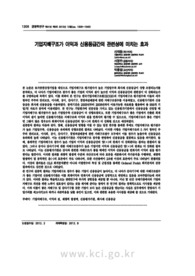
    본 논문은 유가증권상장기업을 대상으로 기업지배구조 평가점수가 높은 기업일수록 회사채 신용등급이 상향 조정되는가를분석하고, 더 나아가 기업지배구조 점수가 좋은 기업의 이익의 질이 높으면 이익과 신용등급간의 관련성이 더 강화되는가를 규명하는데 목적이 있다. 이를 위하여 본 연구는 한국기업지배구조원(KCGS)의 기업지배구조 평가점수와 이들의 세부항목인 주주의 권리보호, 이사회, 공시, 감사기구, 경영과실배분에 관한 지배구조점수를 이용하였고, 신용평가기관의 신용등급은 회사채 신용등급을 사용하였다. 분석기간은 2003년부터 2009년까지 이용가능한 자료원을 활용하여 총 956개 기업/연 자료가 분석에 이용되었다. 본 연구는 기업평가에 전문성을 가지고 있는 신용평가기관에서 신용등급을 산정할 때기업지배구조 평가점수가 높은 기업일수록 신용등급이 더 상향조정되고, 또한 기업지배구조가 좋은 기업에서 산출된 회계이익의 질이 높다면 신용평가기관은 지배구조와 이익의 질을 연계시켜 평가할 수 있으므로, 기업지배구조가 좋은 기업이면 그렇지 않은 경우보다 회계이익과 신용등급간의 양(+)의 관계가 더 강화될 것으로 예상하였다.
    실증분석 결과는 다음과 같다. 첫째, 신용등급에 영향을 미칠 수 있는 일정 변수를 통제한 후에도 기업지배구조 평가점수가 높은 기업일수록, 신용등급은 유의하게 상향조정된 결과로 나타났다. 이러한 사항은 기업지배구조의 5 가지 항목인 주주의 권리보호, 이사회, 공시, 감사기구, 경영과실배분에 관한 지배구조점수 모두에서 이들 점수가 높을수록 신용등급은유의하게 높게 나타났다. 이는 신용평가기관은 기업지배구조 점수를 반영하여 신용등급을 결정하고 있음을 의미한다. 둘째, 총계적인 기업지배구조 점수가 높은 기업의 이익과 신용등급간의 양(+)의 관계가 더 강화된다는 결과는 관찰되지 않았다. 그러나 공시나 감사기구에 관한 지배구조점수가 높은 기업이면 이익과 신용등급간 양(+)의 관계는 더 강화된 결과로 나타났다. 이는 신용평가기관은 감사와 관련한 지배구조가 좋을 때에만 이익과 신용등급을 연계시켜 이익의 질을 평가한다는 발견이다. 이러한 결과를 재량적 발생액 수준과 자산규모에 따라 표본을 세분화시켜 추가분석을 수행하면, 재량적발생액이 덜 공격적인 음(-)의 표본에서 주로 나타나며, 또한 자산총액이 2조원 이상의 표본에서 주로 나타남이 관찰되었다. 이상의 결과들은 OLS 회귀분석뿐만 아니라 서열변수의 특성 및 군집성을 통제한 Ordered Probit 회귀분석의 검증결과에서도 강건한 것으로 나타났다.
    본 연구의 실증적 결과는 기업지배구조 점수가 좋은 기업이 신용등급이 높아지고, 더 나아가 감사기구에 대한 지배구조점수가 좋은 기업이면 신용평가기관은 이를 회계이익과 연계시켜 신용등급에 긍정적으로 반영하고 있음을 보여주었다는데 의의가 있다. 이러한 결과는 학술적으로는 관련연구에 추가적 공헌점을 제공할 뿐 아니라, 지난 몇 년간 규제기관에서의 기업의지배구조 개선을 위한 노력이 실효성이 있다는 것을 제시해 준다는 점에서 본 연구의 결과는 정책적으로도 시사점을 제공한다. 이와 더불어 좋은 지배구조 및 감사기구를 갖춘 기업이 보다 높은 신용등급을 받는다는 사실은 실무계에서 경영자가 기업가치를 제고시키고자 하거나 자본비용을 낮출 유인이 있으면, 이와 관련한 유용한 시사점을 제공해 줄 것으로 기대된다.

    영어초록

    This study examines whether better corporate governance is associated with higher credit ratings. Moreover, it investigates whether better corporate governance strengthens the positive association between earnings and credit ratings. This study makes use of the quantified corporate governance scores (CG score) as computed by the Korea Corporate Governance Service which provides separate CG scores based on five categories (shareholder rights, board of directors,disclosure, audit scheme and dividend policy) along with an overall total CG score. As for the credit ratings, corporate bond ratings were considered. After imposing the data requirement,the final sample used for this study results in 956 firm-year observations based on firms listed in the Korean Stock Exchange from 2003 to 2009. For analyses purposes, this study employs OLS and clustered-adjusted ordered probit regressions.
    Even after controlling for possible factors that might influence credit ratings, we find that higher corporate governance scores are associated with higher credit ratings. This result does not only apply to the overall total CG score, but also when the five corporate governance categories were considered individually which suggests that rating agencies award higher credit ratings to firms with better corporate governance.
    In examining the effect of corporate governance on the association between earnings and credit ratings, we find no evidence that a higher overall total CG score strengthens the positive association between earnings and credit ratings. However, when each of the five corporate governance categories were considered individually, we find that a higher CG score related to disclosure and audit scheme is associated with a stronger positive relation between earnings and credit ratings. This suggests that rating agencies perceive earnings reported by firms with better corporate governance related to disclosure and audit scheme to be of higher quality which are ultimately translated into higher credit ratings.
    The Korean Securities Law distinguishes between firms with total assets less than and more than 2 trillion KRW by imposing different requirements regarding the fraction of outside directors. Since this unique regulatory setting could result in significantly higher corporate scores for firms whose total assets exceed 2 trillion KRW than for firms whose total assets are below 2 trillion KRW, this study conducts additional analyses by dividing the total sample into firms with total assets less than and more than 2 trillion KRW. When considering the overall total CG score we are able to confirm our result that a higher CG score is associated with higher credit ratings for both subsamples. When the five corporate governance categories were considered individually, however, we find that some corporate governance categories affect credit ratings differently depending on the size of total assets. Specifically, the results show that rating agencies consider corporate governance related to disclosure and audit scheme as important for the subsample of firms with total assets less than 2 trillion, whereas corporate governance related to the board of directors is considered as important for the subsample of firms with total assets more than 2 trillion. Corporate governance related to shareholder rights and dividend policy appear to be evaluated in the same manner by rating agencies regardless of the size of total assets.
    Rating agencies may interpret earnings management through discretionary accruals as degrading the quality of a firm’s earnings. In other words, discretionary accruals might directly influence the quality of earnings. As a robustness test, this study, thus, also examines the effect of corporate governance on the association between earnings and credit ratings by dividing the total sample into firms with positive and negative discretionary accruals. We do not obtain significant results when considering the overall total CG score. When the five corporate governance categories were considered individually, however, we find that some corporate governance categories affect credit ratings differently depending on the degree of earnings management as measured by discretionary accruals. In particular, for firms with negative discretionary accruals (i.e.
    firms with smaller degrees of earnings management) rating agencies associate better corporate governance related to disclosure and audit scheme with higher earnings quality which translates into higher credit ratings. On the other hand, firms with positive discretionary accruals (i.e.
    firms with greater degrees of earnings management) and better corporate governance related to dividend policy are perceived to induce lower credit ratings. A possible explanation is that high levels of earnings in such firms are expected to be paid out as dividends rather than reinvested in the firm which is negatively perceived by the rating agencies.
    Our empirical results make academic and practical contributions. Academically, we have shown that better corporate governance is associated with higher credit ratings and that rating agencies perceive earnings reported by firms with better corporate governance related to disclosure and audit scheme to be of higher quality which are ultimately translated into higher credit ratings. This finding has important implications for practitioners as well in the course of firm valuation by shedding light on how corporate governance is accounted for in credit ratings.

    참고자료

    · 없음
  • 자주묻는질문의 답변을 확인해 주세요

    해피캠퍼스 FAQ 더보기

    꼭 알아주세요

    • 자료의 정보 및 내용의 진실성에 대하여 해피캠퍼스는 보증하지 않으며, 해당 정보 및 게시물 저작권과 기타 법적 책임은 자료 등록자에게 있습니다.
      자료 및 게시물 내용의 불법적 이용, 무단 전재∙배포는 금지되어 있습니다.
      저작권침해, 명예훼손 등 분쟁 요소 발견 시 고객센터의 저작권침해 신고센터를 이용해 주시기 바랍니다.
    • 해피캠퍼스는 구매자와 판매자 모두가 만족하는 서비스가 되도록 노력하고 있으며, 아래의 4가지 자료환불 조건을 꼭 확인해주시기 바랍니다.
      파일오류 중복자료 저작권 없음 설명과 실제 내용 불일치
      파일의 다운로드가 제대로 되지 않거나 파일형식에 맞는 프로그램으로 정상 작동하지 않는 경우 다른 자료와 70% 이상 내용이 일치하는 경우 (중복임을 확인할 수 있는 근거 필요함) 인터넷의 다른 사이트, 연구기관, 학교, 서적 등의 자료를 도용한 경우 자료의 설명과 실제 자료의 내용이 일치하지 않는 경우
문서 초안을 생성해주는 EasyAI
안녕하세요 해피캠퍼스의 20년의 운영 노하우를 이용하여 당신만의 초안을 만들어주는 EasyAI 입니다.
저는 아래와 같이 작업을 도와드립니다.
- 주제만 입력하면 AI가 방대한 정보를 재가공하여, 최적의 목차와 내용을 자동으로 만들어 드립니다.
- 장문의 콘텐츠를 쉽고 빠르게 작성해 드립니다.
- 스토어에서 무료 이용권를 계정별로 1회 발급 받을 수 있습니다. 지금 바로 체험해 보세요!
이런 주제들을 입력해 보세요.
- 유아에게 적합한 문학작품의 기준과 특성
- 한국인의 가치관 중에서 정신적 가치관을 이루는 것들을 문화적 문법으로 정리하고, 현대한국사회에서 일어나는 사건과 사고를 비교하여 자신의 의견으로 기술하세요
- 작별인사 독후감
해캠 AI 챗봇과 대화하기
챗봇으로 간편하게 상담해보세요.
2026년 01월 09일 금요일
AI 챗봇
안녕하세요. 해피캠퍼스 AI 챗봇입니다. 무엇이 궁금하신가요?
6:35 오후